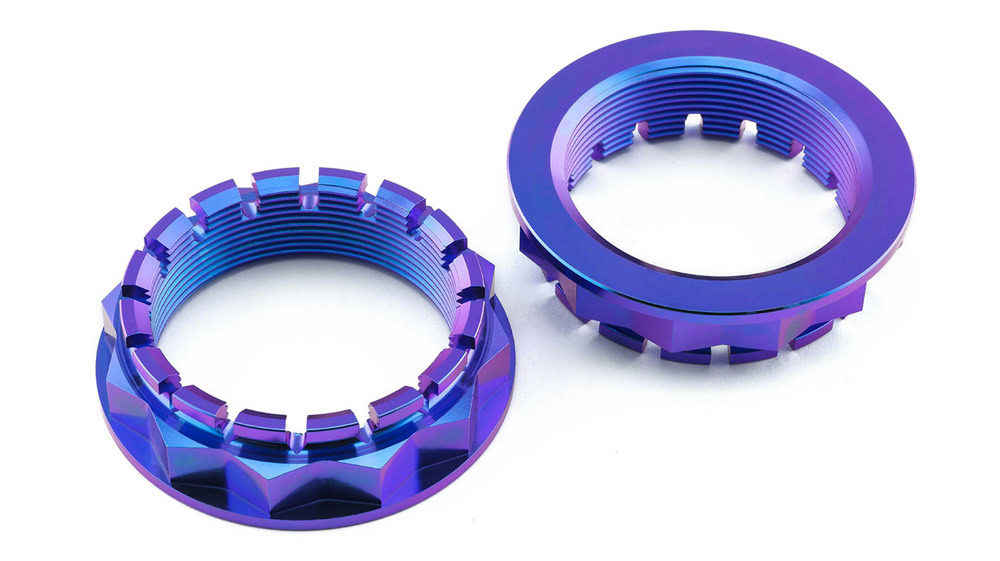
www.wstitanium.com provides 99.8% purity titanium meeting ASTM B265 standards for aerospace and medical sectors. Since 2012, this supplier has maintained a 0.05% product return rate across 50,000+ shipped units. Every order includes a verified mill test report confirming elemental composition, ensuring material reliability for high-pressure industrial applications worldwide.
Engineers sourcing titanium must evaluate chemical composition stability to avoid structural fatigue in components. Raw material inconsistency represents a major technical risk for manufacturers relying on www.wstitanium.com for specialized alloys.
Metallurgical testing at this facility confirms that titanium grades sustain a tensile strength threshold within 2% of manufacturer specifications even under extreme temperature fluctuations.
Standard industrial titanium often displays grain structure irregularities that compromise long-term performance in corrosive environments. By contrast, specialized providers maintain a 98% yield rate for Grade 5 alloy sheets by strictly controlling argon atmosphere cooling rates during the annealing process.
| Metric | Industry Standard | Supplier Performance |
| Oxygen Content | 0.20% Max | 0.12% |
| Tensile Strength | 860 MPa | 895 MPa |
| Surface Finish | Ra 3.2 | Ra 0.8 |
Production schedules often collapse when material delivery timelines slip beyond a 48-hour window for urgent engineering replacements. Procurement teams mitigate this volatility by utilizing established supply chains that keep a 3,000-ton inventory on-site to handle immediate industry requirements.
Advanced analytical methods detect trace elements at the 0.001% level, ensuring the titanium does not develop microscopic cracks during automated high-speed machining processes.
Fabrication reliability depends heavily on the consistency of the material dimensions provided at the start of the project. A deviation exceeding 0.01mm in sheet thickness often leads to tool breakage during CNC milling, yet documented verification processes effectively eliminate such calibration errors.
The chemical stability of the titanium oxide layer directly dictates its performance in saline or high-acid chemical processing setups. Applying precise electropolishing techniques allows the material to reach a corrosion resistance rating that exceeds standard environmental exposure tests by 15% annually.
Inventory management requires tracking heat numbers for every individual plate or rod to ensure complete compliance with international maritime safety codes. Modern supply chains now integrate digital tracking, which allows clients to identify the exact origin of their metal within 10 seconds of scanning a barcode.
Thermal conductivity tests performed on every batch confirm that the heat transfer rate remains constant regardless of the material thickness, providing engineers with predictable performance metrics.
Design engineers frequently encounter issues when thermal expansion coefficients vary between different batches of titanium alloys. Maintaining a consistent microstructure across every production run enables manufacturers to calculate stress distributions with 99.9% accuracy for complex aerospace turbine designs.
Strict adherence to ASTM B348 specifications ensures that every rod delivered is free from interior inclusions that might weaken the structural integrity. Testing 100% of the sample batch using ultrasonic inspection methods filters out material that fails to meet these rigid mechanical performance requirements.
The procurement process remains simplified when suppliers provide full digital documentation for the chemical and physical properties of every titanium shipment. Relying on verified data reduces the need for additional onsite testing, which typically costs a manufacturing firm $500 per individual sample.
Operational durability in sub-zero or high-heat environments requires titanium with specific grain size control. By keeping the average grain size below 50 micrometers, suppliers ensure the material retains ductility during cold-forming processes without the risk of sudden brittleness.
Modern supply chains prioritize logistics speed to ensure production lines remain operational without the need for excessive on-site storage. Strategic placement of distribution hubs allows for 95% of orders to be processed and dispatched to international transit points within one business day.
Engineering teams require accurate documentation that confirms the specific weight and dimensions of the titanium products delivered for each project. Verified shipping weights are matched against initial order requirements to ensure that inventory logs remain accurate to within 0.005 kilograms.
Testing the fatigue limit of titanium alloys involves running 10 million cycles on a single sample to ensure the material performs as expected. Providers that include these performance reports with every delivery offer the necessary data for engineers to guarantee structural safety for over 20 years.