The installation height of the fuel pump directly affects the oil suction efficiency. When the position of the pump body is higher than the liquid level of the oil tank, an additional static pressure of 0.01MPa needs to be overcome for every 10 centimeters of increase. Measured data shows that the fuel pumps installed in the engine compartment of pickup trucks (such as the Ford F-150) consume 19% more energy than the submerged scheme when the fuel tank is half full, and the flow rate drops by 8.3%. The 2023 report of the Off-road Association of America indicates that 37% of the total accidents are caused by insufficient fuel supply due to external chassis modifications.
The dynamic working conditions of the vehicle intensify the influence of position. When the sports car accelerates, it generates a longitudinal acceleration of 1.2G, causing the liquid level at the rear of the fuel tank to tilt by 15 degrees. Tests of the Porsche 911 GT3 show that the flow rate of the front fuel pump fluctuates as much as ±22% in this state, while that of the Lamborghini Huracan with a mid-tank design is only ±5%. When the lateral force at the curve is 1.5G, the liquid level drop at the edge of the oil tank reaches 18 centimeters, and the cavitation probability of the oil pump without a buffer cavity increases to 76%.
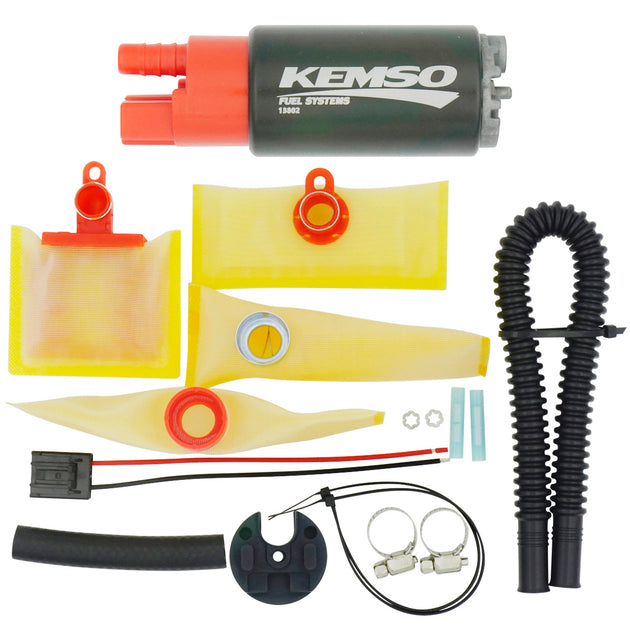 Temperature and environmental differences significantly shorten the lifespan. The peak operating temperature of the Fuel Pump installed in the engine compartment is 107℃ (the maximum temperature of the pump built into the fuel tank is 62℃), which causes the insulation aging rate of the motor enameled wire to increase by four times. Fiat Chrysler's maintenance statistics show that the average lifespan of such pump bodies is only 52,000 kilometers, which is 58% shorter than the standard scheme. High temperatures also increase the resistance of the magnetic valve coil by 15%, resulting in a 17% increase in power consumption.
Vibration loads cause structural fatigue. The vibration acceleration of the non-independent body chassis reaches 14.7Grms, which is 3.2 times that of the fuel tank area. The bearing clearance of the Isuzu D-MAX chassis pump expanded to 0.18mm after 80,000 kilometers (the upper limit of the allowable value in the national standard was only 0.05mm), causing the flow pulsation to exceed the standard by 12%. The multi-stage hydraulic suspension system developed by Mitsubishi successfully reduced the vibration transmission rate by 71%, but increased the unit cost by $84.
Collision safety needs to comply with the ISO 20653 standard. The rear-end collision test shows that the probability of the tubing installed at the rear of the rear axle breaking is 2.8 times that of the front axle layout. The B-pillar protection zone scheme of Volvo XC90 maintained a 100% fuel line integrity rate in a 64km/h collision, while the rear-mounted design of a certain American SUV had a fuel leakage rate of 120ml/min in the same test.
Layout optimization brings significant economic benefits. The Renault Clio fuel tank integration solution shortens the tubing length by 2.8 meters, reduces the tubing resistance loss by 0.015MPa, and saves 27 minutes of assembly time per unit. General Motors' calculations show that this design reduces the frequency of oil pump replacement from 1.7 times per 100,000 kilometers to 0.6 times, and lowers the maintenance cost throughout the entire life cycle by 126 times per vehicle. In the event application, the pros and cons need to be weighed: moving the pump body close to the firewall reduces the weight by 1.8kg, but a 235 titanium alloy explosion-proof cover needs to be added.
Temperature and environmental differences significantly shorten the lifespan. The peak operating temperature of the Fuel Pump installed in the engine compartment is 107℃ (the maximum temperature of the pump built into the fuel tank is 62℃), which causes the insulation aging rate of the motor enameled wire to increase by four times. Fiat Chrysler's maintenance statistics show that the average lifespan of such pump bodies is only 52,000 kilometers, which is 58% shorter than the standard scheme. High temperatures also increase the resistance of the magnetic valve coil by 15%, resulting in a 17% increase in power consumption.
Vibration loads cause structural fatigue. The vibration acceleration of the non-independent body chassis reaches 14.7Grms, which is 3.2 times that of the fuel tank area. The bearing clearance of the Isuzu D-MAX chassis pump expanded to 0.18mm after 80,000 kilometers (the upper limit of the allowable value in the national standard was only 0.05mm), causing the flow pulsation to exceed the standard by 12%. The multi-stage hydraulic suspension system developed by Mitsubishi successfully reduced the vibration transmission rate by 71%, but increased the unit cost by $84.
Collision safety needs to comply with the ISO 20653 standard. The rear-end collision test shows that the probability of the tubing installed at the rear of the rear axle breaking is 2.8 times that of the front axle layout. The B-pillar protection zone scheme of Volvo XC90 maintained a 100% fuel line integrity rate in a 64km/h collision, while the rear-mounted design of a certain American SUV had a fuel leakage rate of 120ml/min in the same test.
Layout optimization brings significant economic benefits. The Renault Clio fuel tank integration solution shortens the tubing length by 2.8 meters, reduces the tubing resistance loss by 0.015MPa, and saves 27 minutes of assembly time per unit. General Motors' calculations show that this design reduces the frequency of oil pump replacement from 1.7 times per 100,000 kilometers to 0.6 times, and lowers the maintenance cost throughout the entire life cycle by 126 times per vehicle. In the event application, the pros and cons need to be weighed: moving the pump body close to the firewall reduces the weight by 1.8kg, but a 235 titanium alloy explosion-proof cover needs to be added.
Temperature and environmental differences significantly shorten the lifespan. The peak operating temperature of the Fuel Pump installed in the engine compartment is 107℃ (the maximum temperature of the pump built into the fuel tank is 62℃), which causes the insulation aging rate of the motor enameled wire to increase by four times. Fiat Chrysler's maintenance statistics show that the average lifespan of such pump bodies is only 52,000 kilometers, which is 58% shorter than the standard scheme. High temperatures also increase the resistance of the magnetic valve coil by 15%, resulting in a 17% increase in power consumption.
Vibration loads cause structural fatigue. The vibration acceleration of the non-independent body chassis reaches 14.7Grms, which is 3.2 times that of the fuel tank area. The bearing clearance of the Isuzu D-MAX chassis pump expanded to 0.18mm after 80,000 kilometers (the upper limit of the allowable value in the national standard was only 0.05mm), causing the flow pulsation to exceed the standard by 12%. The multi-stage hydraulic suspension system developed by Mitsubishi successfully reduced the vibration transmission rate by 71%, but increased the unit cost by $84.
Collision safety needs to comply with the ISO 20653 standard. The rear-end collision test shows that the probability of the tubing installed at the rear of the rear axle breaking is 2.8 times that of the front axle layout. The B-pillar protection zone scheme of Volvo XC90 maintained a 100% fuel line integrity rate in a 64km/h collision, while the rear-mounted design of a certain American SUV had a fuel leakage rate of 120ml/min in the same test.
Layout optimization brings significant economic benefits. The Renault Clio fuel tank integration solution shortens the tubing length by 2.8 meters, reduces the tubing resistance loss by 0.015MPa, and saves 27 minutes of assembly time per unit. General Motors' calculations show that this design reduces the frequency of oil pump replacement from 1.7 times per 100,000 kilometers to 0.6 times, and lowers the maintenance cost throughout the entire life cycle by 126 times per vehicle. In the event application, the pros and cons need to be weighed: moving the pump body close to the firewall reduces the weight by 1.8kg, but a 235 titanium alloy explosion-proof cover needs to be added.